
But why does the AI vibe take away from what you’re reading?
The first line of an Italian paper by Francesca Simion from the Center for Cognitive Neuroscience and the University of Padova and Elisa Di Giorgio from the Center for Mind/Brain Sciences and University of Trento says it all about the AI vibe: “The ability to detect and to discriminate social beings from inanimate objects is of paramount importance to survive.”
One way we can detect and discriminate was explored further in a paper by Evangelia Baka, Ajay Vishwanath, Nidhi Mishra, Georgios Vleioras, and Nadia Magnenat Thalmann from MIRALab and the University of Geneva: The authentic expression of emotions and ideas. Essentially the authors found evidence to suggest that humans can (a) recognize authentic humanity around them, and (b) are genetically predisposed to note inauthentic humanity.
This truth was dramatized in the 1956 film, Invasion of the Body Snatchers, which is one of the reasons why the movie struck such a chord. The quizzical look on Dr. Bennell’s face when he starts to realize something’s not quite right about his neighbours is probably similar to the look you’d make when you realize what you’re reading might not be human.
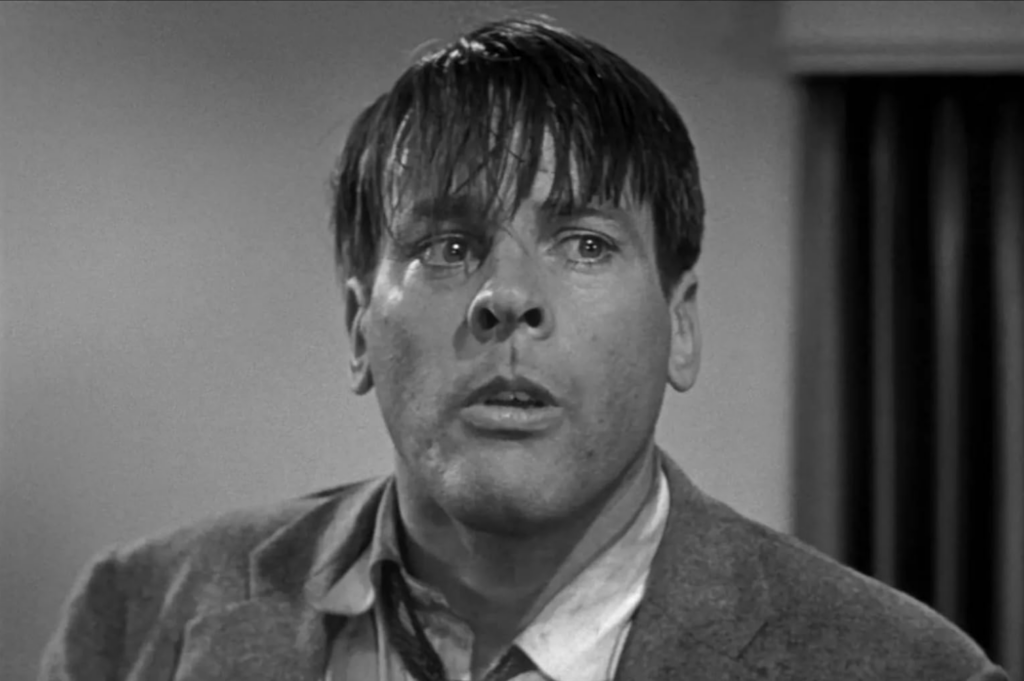
Kevin McCarthy as Dr. Miles Bennell in Invasion of the Body Snatchers (1956)
The one constant across all writing since forever.
Scholars trace the origins of writing back to the cuneiform system of 3500 BCEs Mesopotamia and ancient Egypt’s hieroglyphs. The transition from pictograhical writing (symbols to represent words) to phonetic writing (symbols to represent sounds) came care of Phoenician traders around 1000 BCE*. For them, it was a fast, flexible shorthand that made learning other languages easier. As traders spread the idea across the ancient world, people in some of the places they went borrowed the core idea and tweaked the letters to fit their own spoken sounds. People in other places rejected the idea and stuck with pictographical (or logographical, which are symbols to represent ideas).
Regardless of how it was written, the constant for 5,500 years has been humans reading the emotions and ideas of other humans. This is the first time since the time of the prophets that we have been spoken to by non-human entities in a language we can understand. And since recognizing human authenticity is baked into our DNA, of course we’d recognize the AI vibe as a bit off when we see it.
We notice the AI vibe. But why do we react the way we do?
First, we must separate the reactions into two categories: the creation of AI writing and the receiving of AI writing, because they’re very different.
When we’re using AI to write, the reaction is amazement, and rightfully so. If you remember the first time you got AI to write something, you were probably blown away. You most likely dropped a “holy crap!” when you saw what it produced and how little time it took. And if writing is more difficult for you than other tasks, you probably saw a solution to a very real problem.
In all that ooh and aah of the possibilities created by this writing aide, what you probably didn’t notice was lack of humanity on the page (aka, the AI vibe). But your audience noticed it.
The uncanny valley
The uncanny valley was a concept put forth in a 1970 essay by Japanese roboticist Masahiro Mori. As the time, Japan was becoming a force multiplier in the robotics space, especially at the Tokyo Institute of Technology where Mori was posted. Through his work, Mori noticed something interesting: a natural human aversion to robots that were human enough to feel real but still fundamentally artificial. He referred to robots that elicit this adverse reaction in people as being in the uncanny valley.
When someone receives AI-generated copywriting, the rational feeling they get is somewhere between mildly slighted and deeply offended that the brand didn’t care about them enough to give them a bit of humanity. But behind the curtain, what they’re feeling is an aversion to the uncanny valley, informed by 5,500 years of human-to-human written communication in our DNA, and a natural predisposition to judge anything non-human as foreign and potentially dangerous. That’s when they make their Dr. Bennell face when they notice the AI vibe, and no brand wants that face anywhere near their messaging.
Will we ever be okay with the AI vibe?
It appears today that the closest we as humans will ever get to being okay with the AI vibe in our art or persuasion will be a begrudging acceptance.*
- We know it’s faster, and anyone with a job knows efficiency is valued. But we feel the impersonality and we don’t like it.
- For now, it’s less expensive (who knows where the credit/token system will land tomorrow) and anyone with a job knows that saving money is always worth exploring. But it feels to others like you got what you paid for.
- We don’t think quality matters because no one’s reading it anyway. And the bots don’t care if it’s AI; in fact, they probably encourage it because they’re run on AI. We’re saddened by this and wish the world hadn’t devolved as it has.
But someone IS reading it.
And that someone is reading it because they think you know something they want to know. If you give it to them, they’ll come to you for more information. Eventually, that exchange will turn monetary and voila: ROI on your investment in content marketing.
But none of that can happen with the hairs on the back of your reader’s neck standing up, snapped into attention by the presence of an “other.” It’s completely distracting. It sends the reader into a subconscious state of fight or flight, which winds up being a lose/lose: fight = never forget the brand that cared about them so little as to pass them off to a bot; flight = stop reading and move on.
No rational argument is getting past that.
No selling message is getting through.
It’d be like trying to land a plane in a thick fog that goes from the heavens to the tarmac.
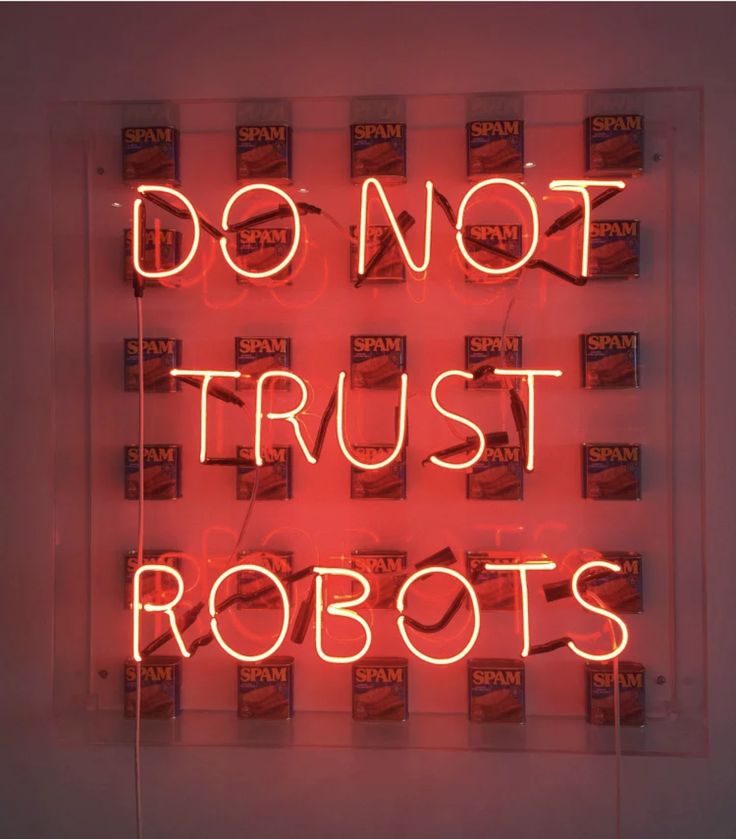
This is the feeling we get when we realize we recognize the AI vibe.
What happens when that someone is you?
When you realize you’re being hoodwinked by a machine passing the AI vibe off as a human trying to connect emotionally with you, the science says your opinion of the hoodwinking person or brand will change for the worse.
If you’re the person or brand about to commit hoodwinkery, are you willing to risk it?
* As Gen Alpha comes into their own having been raised with AI, perhaps they’ll be totally fine with receiving AI art or persuasion. But 5,500 years of evolutionary brain behaviour shifting in one or two generations feels like a tall order.